Thursday, October 15, 2015

Thursday Update October 15, 2015


FOCUS ON FEEDBACK
We know feedback to students is a critical component of the learning process as it informs instruction, guides the learner to self monitor and builds an understanding around the qualities of good work.

This video celebrates the feedback opportunities that were captured at Banting Elementary School-Thanks for Sharing what you do!
LEARNING:
NEW LEARNING OPPORTUNITY
This course will prepare ECs, Coordinators, DL Teachers, Aides, Reg Ed Teachers, Leaders and just about anyone in our system for their role in leading dual Language.
No cost-credit available!
If you'd like to participate, please email dmgarcia@waukesha.k12.wi.us
(Together we will determine when to start)

This week in CCSS-MENTOR TEXT:
Un hombre, un nino y un burro 
por Jennifer Burrows

Moraleja: No intentes complacer a toda la gente, porque así nunca vas a complacer a nadie.
Un hombre y su hijo iban una vez  con su burro de camino al mercado, mientras caminaban a su lado pasaba un hombre de campo que dijo: '¿para qué es el  burro  sino para que montarse sobre?'.
Así que el hombre puso al niño en el burro y siguieron su camino, pero pronto pasaron un grupo de hombres, uno de ellos dijo: 'Mira ese joven perezoso, él deja a su padre caminar mientras el monta cómodamente'.

Así que el hombre que ordenó al muchacho que bajara, y se subió el, pero no habían ido muy lejos cuando pasaron dos mujeres, una de ellas le dijo a la  otra: '¡Qué vergüenza que patán perezoso como  deja que su pobre hijo camine mientras el va en el burro'.
Bueno, el hombre no sabía qué hacer, pero al fin tomó su niño y lo subió delante de él en el burro. Para entonces habían llegado a la ciudad, y los transeúntes comenzaron a burlarse y apuntarles. El hombre se detuvo y preguntó  de qué se estaban burlando y los hombres dijeron:
'¿No te da vergüenza de la sobrecarga que lleva el pobre burro contigo y tu hijo?'.
El hombre y el niño se bajaron y el hombre trató de pensar qué hacer. Pensó y pensó, hasta que por fin cortaron una vara, ataron los pies del burro a la misma, y levantaron la vara y el burro a sus hombros, iban entre las risas de todos los que los veían pasar hasta llegar al puente del Mercado, cuando el burro, con uno de sus pies sueltos, resbaló y cayó sobre el río, lo que provocó las caracajadas de todos los ciudadanos.
'Eso les enseñará', dijo un anciano que los había seguido.

This week in Practice!! (Thanks to Yvette Bielfuss!!)
Let’s celebrate the students at Blair using project based learning. Students are using concrete experiences to help in their understanding of Spanish terms. After this, students worked on the bridging of the content. Students then worked on an extension activity in English.

Using Dual Language pairings, students are communicating with one another to achieve their tasks.

These strategies incorporate academic vocabulary, oracy, collaboration, and extension within science context.

The Kindergarteners studied the parts of a tree through academic vocabulary as well as TPR and visuals.  

They later went on a scavenger hunt to look for different parts of a tree.

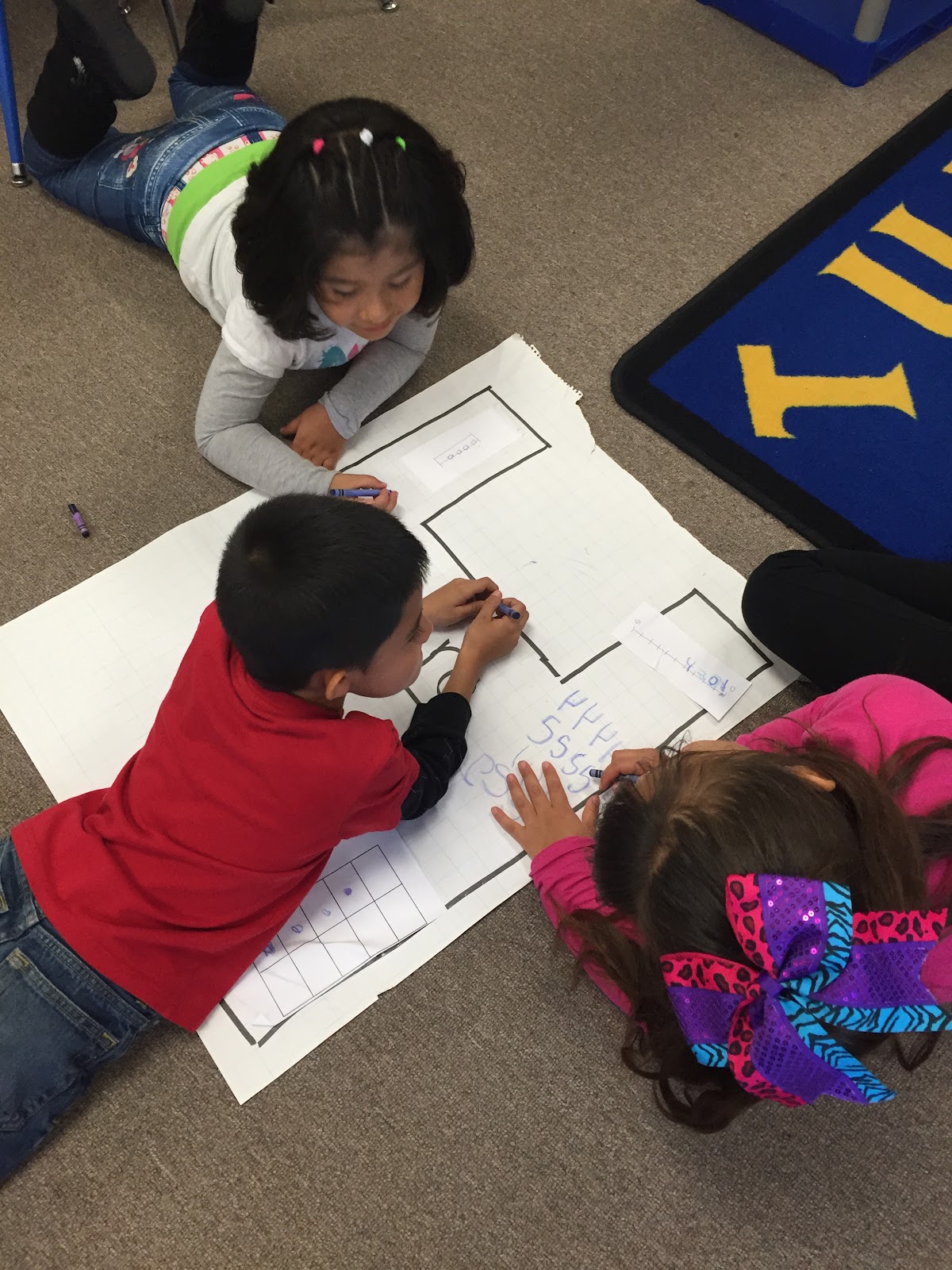
They incorporated math concepts by tallying and graphing their findings.

After bridging, the students worked on an extension activity in English incorporating the changes of a tree throughout the seasons.

Mrs. Lopez and Mrs. Beilfuss’ Kindergarten Dual Language classrooms.


IMG_0104.JPG
NEWS:


NABE: Extended entry for Writing Competition now until November 1st!!
Thanks Jessica Hegg, Kris Carey, Aaron O'Connell and Sarahi Monterrey for your leadership in submission of student writing!


T Shirts
All orders and Money due October 19!

Question: Can a parent order a child small or an adult small?
Answer: YES!, just know, there may be little difference between child medium, and large and adult small.  Also, child small is not that small, and is still big on the little ones.


NEW CONTEST
Submissions due Dec 15!

What a great way to promote Waukesha One in our Dual Language Program!

●   To promote early bilingualism and/or multilingualism, and to recognize and appreciate the achievement of young children who have invested their time and effort in speaking or signing in at least one other world language.

●   To provide an opportunity for young children to start developing global awareness and the linguistic skills necessary to succeed in the 21st century.

●   To provide a platform for children to showcase their multilingual talents and cross-cultural competency.

Wednesday, October 14, 2015

Acquiring and Demonstrating Academic English


Acquiring Academic English
Are your  Learners active in making their thinking visible?  Are they seated in dynamic groups of diverse learners who value how each of them makes the team stronger?  Are students provided scaffolds to produce language that is not currently part of their linguistic complexity?


This article provide a reflective look at how teachers can empower themselves to engage every learner with the curriculum, and learners to other learners!

Asking the right questions to engage English Learners.

Tuesday, October 6, 2015

Thursday Update October 8, 2015

Thursday October 8, 2015

!Feliz mes de la herencia hispana!
!!OJO!! Watch for the Freeman Article on Saturday the 10th, Celebrating three of our DL Teachers: 
Ms. Martha, Mrs. Masis and Mr. Peot


6-7th grade Dual Language 2-Way Les Paul
WAR and ETHOS and ADVOCACY
Greeks and Dual Language!!
LEARNING:
NEW LEARNING OPPORTUNITY
This course will prepare ECs, Coordinators, DL Teachers, Aides, Reg Ed Teachers, Leaders and just about anyone in our system for their role in leading dual Language.
No cost-credit available!
If you'd like to participate, please email dmgarcia@waukesha.k12.wi.us
(Together we will determine when to start)

What's New in Mentor Texts?:
Libro: “ La Otra Orilla”
Escrito e Ilustrador por Marta Carrasco de Chile.

La Otra Orilla escrito e ilustrado por Marta Carrasco. Es la historia de Graciela  una niña que crece con su familia en su poblado a la orilla de un río. En la otra orilla hay otro poblado, con gente distinta, que según sus padres eran gente rara, que no se peinaban, que eran “vagos y bochincheros”. Sus padres, le prohíben cruzar el río, pero la  curiosidad de Graciela crece, preguntándose “¿qué dirán ellos de nosotros?”.
Un niño desde la otra orilla, llamado Nicolás, le hizo señas a Graciela, y de ahí poco a poco nace una amistad. Graciela se dio cuenta que eran distintos, pero también muy parecidos. Su amistad era secreta. Ambos tenían un sueño: cuando ellos crecieran construirían un puente sobre el río. De esta manera, los habitantes de las dos orillas se visitarían millones de veces y sobre el rumor del río se escucharían los saludos y las risas.
Este cuento es una buena herramienta para ayudar a los niños y niñas a discutir la discriminación, el racismo y otros tipos de prejuicios. Al leer este cuento los niños y niñas podrían entender que no somos ni tan iguales, ni tan diferentes, sino que depende de nuestra cultura familiar, nuestras costumbres y tradiciones.
Las posibles áreas en donde podemos enfocar nuestra enseñanza son:
  • Familia: valores, enseñanza-aprendizaje
  • Diversidad Cultural: la diferencia entre costumbres y tradiciones de una población, gustos, lenguaje de una familia en particular a diferencia de otras.
  • Prejuicio o discriminación : por raza, color, apariencia física, estilo de vida.
Las unidades en la que podemos desarrollar estos temas son: Comunidad, Solución de problemas, Descubrimiento.
En cuanto al vocabulario, podemos trabajar con:  rumor, murmullo, divisé, acortó, encresparon, acurruqué, vagos, bochincheros, rubio y chales. Los últimos cuatros son ideales para expandir el léxico local hispano.
Adicionalmente, durante el estudio de este libro notarán que una de las paginas Graciela y Nicolás están  jugando con las piedras del rio y forman un diagrama de Venn con ellas. Esta es  una excelente oportunidad para desarrollar las diferencias e igualdades entre los dos poblados. A su vez se puede desarrollar uno relacionado con comunidad de la escuela.
Este libro es apropiado para los grados K-2.
Espero que lo disfruten tanto como lo hice yo.


Karel Corredor
DL 1st grade at Heyer Elementary
What's new in language, literacy and content learning?:
Let’s celebrate what our youngest students at Heyer are doing.

Kindergarteners can now work as a team on an artifact !!!
IMG_0197.JPG

Using this strategy involves oracy: sharing ideas, use of academic vocabulary/language and collaboration.

Martha Smilanich
DL Kindergarten

NEWS:

NABE: Extended entry for Writing Competition now until November 1st!!
Thanks Jessica Hegg, Kris Carey, Aaron O'Connell and Sarahi Monterrey for your leadership in submission of student writing!


T Shirts
All orders and Money due October 19!

Question: Can a parent order a child small or an adult small?
Answer: YES!, just know, there may be little difference between child medium, and large and adult small.  Also, child small is not that small, and is still big on the little ones.


NEW CONTEST
Submissions due Dec 15!

What a great way to promote Waukesha One in our Dual Language Program!

●   To promote early bilingualism and/or multilingualism, and to recognize and appreciate the achievement of young children who have invested their time and effort in speaking or signing in at least one other world language.

●   To provide an opportunity for young children to start developing global awareness and the linguistic skills necessary to succeed in the 21st century.

●   To provide a platform for children to showcase their multilingual talents and cross-cultural competency.
Banting Comprehensive (Bi) Literacy VIDEO!

Banting SLO click the link!

Is it okay for students to speak Spanish in your ART class? ASCD, 2008

Did you ever observe students using a language other than English in your classroom, the cafeteria, the library or at a school concert?

Have you wondered, why do they do that when they know you do not understand?

Have you considered how a student's use of language is connected to his identity as a person?

If any of these questions or others have crossed your mind, causing you to wonder what "to do about it" or how to support students and the class climate, then this resource is for you!

Link:

Friday, October 2, 2015

NABE Writing Contest Changes!!

NABE 2016 Student Essay Contest
Important notice to all elementary school, middle school, and high school students who are learning in two languages:

The National Association for Bilingual Education (NABE) invites you to participate in its 

45th Annual Nationwide Writing Contest for Bilingual Students.

THE DEADLINE FOR SUBMISSION IS:
November 1st, 2015


TOPIC

Write an essay about being bilingual, using the correct theme for the student's grade level, as listed below:

Students in Grades 3-5:        Proud to Be Bilingual
Students in Grades 6 – 8:     The Importance of being Bilingual
Students in Grades 9 -12:     How being bilingual will assist me in my future endeavors

CASH PRIZES -First Place Winners
• Grades 3-5:   $500
• Grades 6-8:   $500
• Grades 9-11: $500

TRAVEL AWARDS:  First Place Winners- Student winners, along with one (1) parent/guardian will travel to Chicago, IL to attend the NABE Conference Awards Luncheon on March  4,  2015. This will include: air travel ticket up to $500.00 per person, two (2) nights lodging at the NABE Conference Headquarter Hotel, (2) NABE Conference Registrations and two (2) NABE Awards Luncheon tickets, a total value of $2,500.  

ELIGIBILITY

• Participation in the contest is limited to students who are enrolled in a bilingual classroom, or in a classroom with native language support.
• Participants must have a average or better in academic grades and at least a 90% school attendance record.
• Previous winners are not eligible to participate.


CRITERIA

Each essay will be judged on:
(1) Development of the theme – 30%; 
(2) Originality – 20%;
(3) Content and clarity of expression–30%; and
(4) Grammar and mechanics – 20%

RULES

Only entries that comply with the following rules will be considered:

·      Language: Essay must be written in the student’s second language. For example, if the student is participating in a dual language program and English is her/his first language, the essay must be written in the second and not in English. 

·      Subject: All essays must address the theme listed under “TOPICS” above for the appropriate grade level.

·      Length: The number of words must be listed at the end of each essay.  Lengths must be as follows:
 Grades 3-5: 150-200 words
 Grades 6-8: 250-350 words
 Grades 9-11: 400-500 words

·      Format: The essay must be handwritten neatly in ink or
Microsoft Word document, 12 Font, double spaced. Word documents must be submitted electronically via email – scanned Word documents will not be considered.  If the essay is handwritten please scan document and submit via email. A cover page must be provided with the essay title and the student’s name. The student’s name should not appear on the essay. An additional page with a signed acknowledgement from the student’s teacher verifying that the student meets the contest eligibility criteria must also be submitted.

·      Application: The online application form must be completed and
submitted by teacher. 

·      Copyright:  All essays become the property of NABE and will not be returned. NABE reserves the right to publish all essays.

JUDGING
A panel of judges will select the national winners in each grade category.

ENTRY SUBMISSION 
Email submission: Deadline to submit: November 1st, 2015 - 11:59 PM CST

Email: awards.nabe@gmail.com
Your email subject should read: 2016 Student.
The email body should include the applicant's name.


Contest entries to be submitted by teacher.

Deadline: All nominations must be received by November 1, 2015 at the email listed below. The winner will be notified by December 15, 2015.

Entries from students from all language backgrounds are encouraged. 

Thursday, October 1, 2015

Thursday Update October 1, 2015


October 1, 2015
Celebrations!!
 Loving your "Muro de Letras Tramposas"!


Bilingual Pairs-All about planning!
Maximizing support for language acquisition and literacy


OCTOBER IMPORTANT DATES
October 5: Site Visits Heyer, LP, South
October 5:UNIT 2 CLM(English 2-5)/BUF(Spanish 2-5)  begins October 5th- November 13th
October 7: DL DISTRICT PLC 9-12 Blair, check invite for agenda and what to bring
October 7: DL EC PD 12-3:30 Blair
October 8: Google Hangout 3:40 XMas Parade Planning for DL Marketing
October 12: Site Visits Banting HMS
October 12: DL Middle School PLC
October 19: Site Visits Blair BMS
October 19: T SHIRT requests by site are due.
October 20: DL PLC Banting
October 21: DL PLC Bethesda
October 22: DL PLC Heyer
October 26: Site Visits Bethesda, West, North
October 27: DL PLC Blair
October 28: T Shirt arrival!
October 30: Site based plans to align school community activities with opportunities to learn about DL Program and pathways for parent voice, leadership and participation.

October -December DL Spanish Resource Audit grades 3-7 underway

4K and 5th grade families will receive information about choices for 5k and 6th grade 2016-2017.

DL Parent Information Sessions 6-7 PM Lindholm room 109 and 108, 
in English (and SPANISH)
November 10    December 8    January 7      February 9

SEE IT LIVE!!! 9-2, ALL DL Sites, Dec 15, Jan 14, February 18